Dessert Categories in Pub Settings
Published February 2026
Introduction
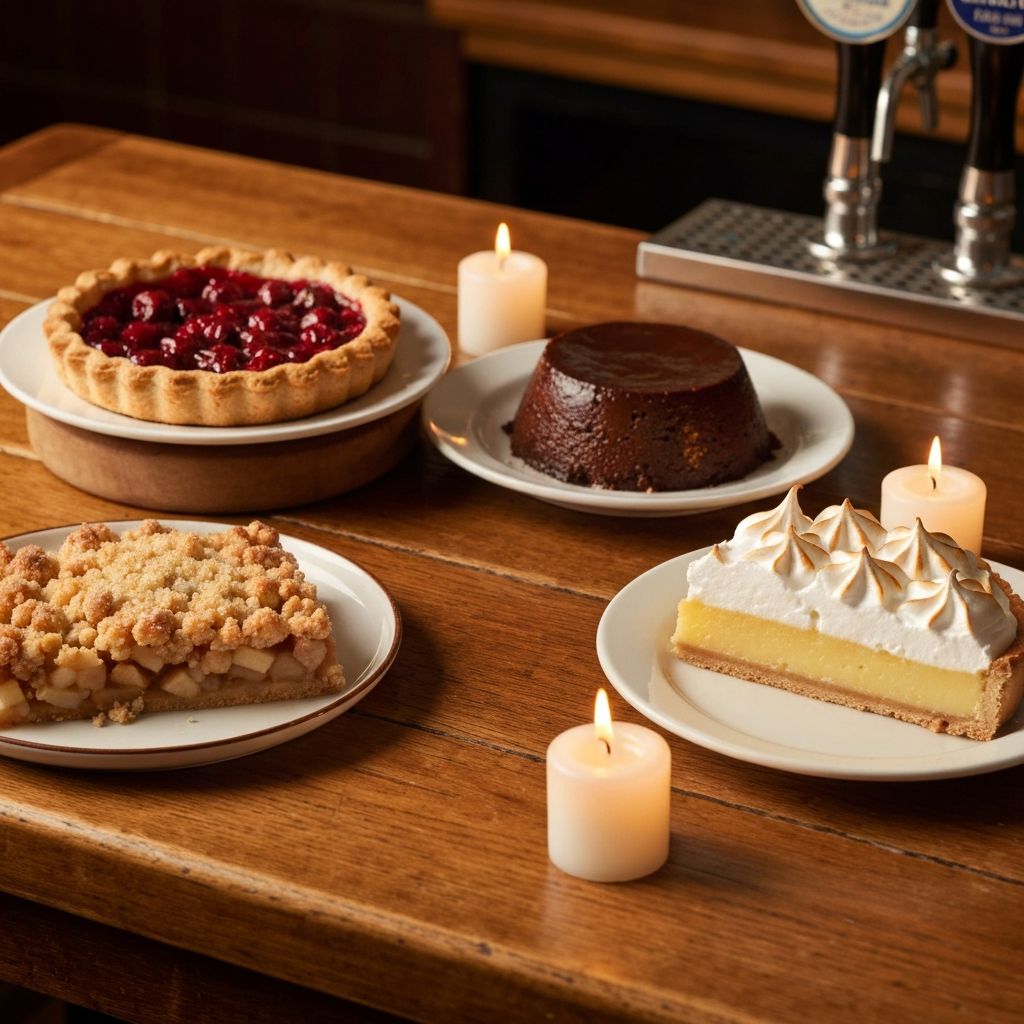
Desserts occupy a significant position in British pub and restaurant menus, ranging from traditional steamed puddings reflecting centuries of culinary heritage to contemporary offerings reflecting modern tastes and ingredients. Understanding the typical categories of desserts available in pub settings—including their preparation methods, ingredients, and energy characteristics—provides context for how these items contribute to overall meal composition in British dining establishments.
Dessert Culture in British Pubs
British pub culture has traditionally included substantial dessert offerings, reflecting both the climate (comfort foods feature prominently) and culinary traditions emphasizing warm, rich preparations. Desserts in British pubs serve multiple functions: they mark the conclusion of a meal, provide satiation and comfort, and reflect cultural identity through traditional preparations.
Contemporary pubs increasingly offer dessert menus ranging from traditional heritage puddings to contemporary fruit-based or chocolate-focused options, reflecting broader shifts in dining expectations and ingredient availability.
Traditional Steamed Puddings
Steamed puddings represent a quintessential category of British pub desserts, with roots in centuries-old culinary tradition. These are made from a mixture of flour, fat (suet or butter), sugar, eggs, and flavorings, steamed in a basin for extended periods to create dense, moist, warming desserts.
Sticky Toffee Pudding
Perhaps the most popular steamed pudding in contemporary pub menus, sticky toffee pudding consists of a dark, moist sponge made with dates, topped with a toffee sauce.
Composition and energy characteristics:
- Typical serving: One portion (approximately 150-200g) with sauce
- Energy content: Approximately 350-500 calories
- Often served with cream or ice cream, adding additional 100-200 calories
Sticky toffee pudding derives its substantial energy from sugar, butter (in both the sponge and sauce), and dates. The combination creates an energy-dense dessert.
Suet Pudding
Traditional suet pudding (such as jam pudding) uses suet (rendered beef fat) as the primary fat component, creating a dense, filling dessert often served with custard.
Energy characteristics:
- Pudding portion: Approximately 150-180g
- Energy content: Approximately 250-400 calories depending on filling and preparation
- Custard (typical serving): Adds approximately 150-250 calories
Pies, Crumbles, and Baked Desserts
Fruit-based desserts in pastry or crumble form represent another major category in British pub menus, offering comfort and tradition.
Fruit Pies
Apple pie, blackberry pie, and other fruit pies feature prominently in pub offerings, with pastry crusts and fruit fillings.
Energy characteristics:
- Typical serving (one slice from standard pie): Approximately 250-400 calories
- Often served with cream or ice cream: Adds approximately 150-250 calories
Pie energy derives from pastry (high fat content), fruit (sugar), and any sweetening agents or binding ingredients in the filling.
Crumbles
Fruit crumbles (apple crumble, berry crumble) consist of fruit filling topped with an oat and butter crumble topping, baked until golden.
Energy characteristics:
- Typical serving: Approximately 250-350 calories
- With cream or ice cream: Adds approximately 150-250 calories
Crumble toppings are high in oats, flour, sugar, and butter, contributing substantial fat and carbohydrates.
Tart and Treacle Tart
Treacle tart, a traditional British dessert, consists of a pastry shell filled with a golden syrup and breadcrumb mixture, creating a sticky-sweet interior.
Energy characteristics:
- Typical serving (one slice): Approximately 300-400 calories
Custard-Based Desserts
Custard-based desserts feature prominently in British pub menus, relying on eggs, milk, and sugar as primary ingredients.
Bread and Butter Pudding
Bread and butter pudding is made from bread layers, custard mixture, and dried fruit, baked in a dish until set with a slightly crispy top.
Energy characteristics:
- Typical serving: Approximately 300-400 calories
- Often served with custard sauce: Adds approximately 100-150 calories
The custard base (eggs, milk, sugar) and bread provide carbohydrates and fat; dried fruit adds additional sugars.
Chocolate Mousse
Chocolate mousse, made by whipping egg whites into melted chocolate and cream, creates an airy, light texture despite high ingredient richness.
Energy characteristics:
- Typical serving (small portion): Approximately 200-350 calories
Chocolate mousse derives energy from chocolate (cocoa butter fat and sugar) and cream. The airy texture provides volume at moderate weight, making portion size relatively small.
Ice Cream and Frozen Desserts
Ice cream appears in most pub menus either as standalone desserts or as accompaniments to other desserts (pies, crumbles, puddings).
Energy characteristics of ice cream:
- Standard vanilla ice cream (100ml): Approximately 200-250 calories
- Premium ice cream (higher fat): Approximately 250-350 calories per 100ml
- Typical single-scoop serving (approximately 60-80ml): Approximately 120-200 calories
- Multiple scoops (two or three): Approximately 240-600 calories
Ice cream energy derives primarily from fat (cream) and sugar. Different flavors and ingredients affect specific energy density, though variations are relatively modest.
Sorbet and Water Ices
Sorbets, made from fruit and sugar without dairy fat, represent lower-energy frozen dessert options compared to ice cream.
Energy characteristics:
- Sorbet (100ml): Approximately 100-150 calories
Cakes and Baked Goods
Individual cakes or slices of larger cakes appear on pub dessert menus, ranging from simple to elaborate preparations.
Chocolate Cake
Energy characteristics:
- Typical slice (with frosting/icing): Approximately 250-400 calories
- Often served with cream or ice cream: Adds 100-200 calories
Lemon Drizzle Cake
Energy characteristics:
- Typical slice: Approximately 200-300 calories
Sponge Cake with Cream and Fruit
Energy characteristics:
- Typical serving: Approximately 300-450 calories
Cheesecake
Cheesecake, made from a pastry or biscuit base, cream cheese filling, and often a fruit topping, represents one of the higher-energy dessert categories.
Energy characteristics:
- Typical slice (1/8 of standard cheesecake): Approximately 350-500 calories
Cheesecake energy derives from the cream cheese filling (fat), pastry base (butter, flour), and often a sugary topping or sauce.
Comparison of Dessert Categories
| Dessert Category | Typical Serving | Approximate Energy (kcal) | Primary Ingredients |
|---|---|---|---|
| Sticky toffee pudding | 180g + sauce | 400-550 | Flour, sugar, dates, butter, toffee |
| Fruit crumble | 200g | 250-350 | Fruit, oats, flour, sugar, butter |
| Pie slice | One slice | 250-400 | Pastry, fruit, sugar |
| Bread & butter pudding | 180g | 300-400 | Bread, eggs, milk, sugar, fruit |
| Chocolate mousse | 150ml | 250-400 | Chocolate, cream, eggs, sugar |
| Ice cream (3 scoops) | 150ml | 350-600 | Cream, milk, sugar |
| Cheesecake slice | One slice | 350-500 | Cream cheese, pastry, sugar |
| Sorbet | 100ml | 100-150 | Fruit, sugar, water |
Accompaniments and Toppings
Many desserts in pub settings are accompanied by sauces, creams, or scoops of ice cream, which substantially increase total energy content:
- Custard sauce: Approximately 100-150 calories per 100ml
- Cream (single): Approximately 100-150 calories per 50ml pour
- Cream (double): Approximately 200-250 calories per 50ml pour
- Ice cream (single scoop): Approximately 120-200 calories
- Chocolate sauce: Approximately 100-150 calories per serving
A dessert described as "apple pie" may range from 250 calories (plain) to 450+ calories if served with a generous portion of cream or ice cream.
Contextual Factors in Dessert Composition
Portion sizes: Pub dessert portions vary considerably. A "standard" slice of pie or cake might range from 100-180g depending on the establishment.
Accompaniment choices: Custard, cream, and ice cream are often offered as options; the diner's choice significantly affects total energy.
Modern or heritage preparations: Contemporary pubs may offer lighter fruit-focused options or elaborate multi-component desserts, affecting typical energy ranges.
Conclusion
British pub desserts span a wide range of traditional and contemporary preparations, with energy content varying from approximately 100-150 calories for simple fruit sorbets to 400-600+ calories for rich traditional puddings, particularly when served with cream or ice cream accompaniments. Understanding the diversity of dessert offerings—including their typical preparation methods and common accompaniments—provides context for how desserts contribute to overall meal composition in British pub and restaurant dining.
This information is presented for educational understanding of food preparation and meal composition, not as guidance for individual meal choices or dietary decisions.