Sauces and Dressings in Typical Offerings
Published February 2026
Introduction
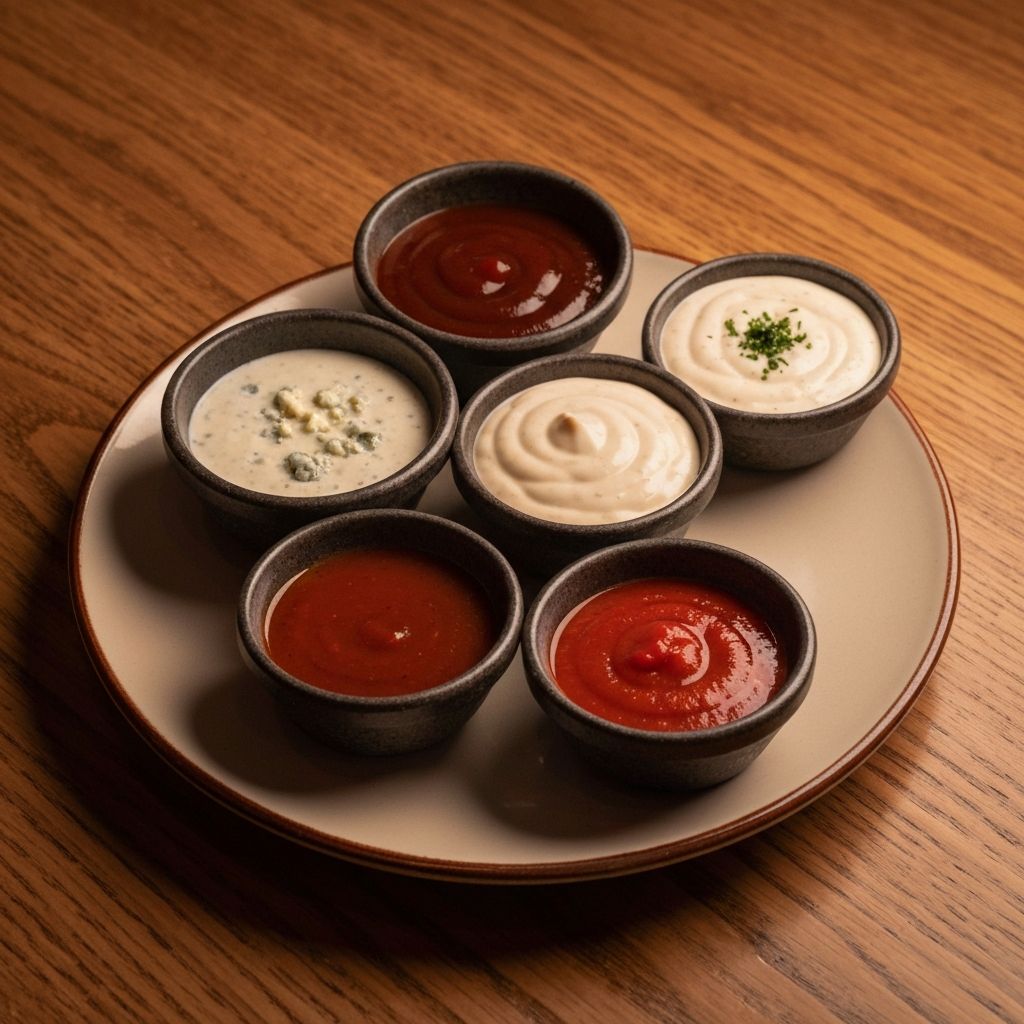
Sauces and dressings are fundamental components of British pub and restaurant cuisine, adding flavor, moisture, and richness to dishes. Beyond their culinary role, sauces and dressings significantly influence the overall nutritional composition of meals, particularly in terms of energy density and fat content. Understanding how these condiments contribute to meal composition provides important context for the total energy content of restaurant meals.
Sauces in British Cuisine
British culinary tradition includes a range of sauces, from light broths to rich, cream-based preparations. These sauces serve multiple functions: adding moisture to dishes, binding ingredients, providing flavor depth, and contributing to the overall palatability of meals.
Sauces are rarely optional additions in British restaurants—they are typically part of the dish presentation. A grilled steak is served with sauce or gravy; fish is often accompanied by a sauce; roasted meats are served with traditional gravies. The sauce represents an integral component of the finished dish rather than merely an optional condiment.
Gravy and Traditional Meat Sauces
Gravy is perhaps the most iconic sauce in British cuisine, particularly in pub settings. Traditional gravy is made from meat drippings, thickened with flour or cornstarch, and served with roasted meats and other traditional dishes.
Composition of traditional gravy:
- Meat drippings (fat from roasted meat)
- Flour or cornstarch (thickening agent)
- Stock (meat or vegetable broth)
- Salt, pepper, and herbs for seasoning
Energy characteristics of gravy:
- Gravy (per 100ml serving): Approximately 30-80 calories depending on fat content
- Rich/creamy gravy (higher fat): Up to 100-150 calories per 100ml
- Light gravy (lower fat): Approximately 20-40 calories per 100ml
- Typical serving amount: 50-100ml (1.5-3 oz)
The primary variable in gravy energy density is the amount of fat derived from meat drippings. Gravy made from high-fat drippings contributes substantially more energy than gravy made from leaner drippings.
Other Meat-Based Sauces
Beyond traditional gravy, British restaurants serve various meat-based sauces:
- Peppercorn sauce: Cream-based with peppercorns, served with steak. High energy due to cream content.
- Mushroom sauce: Typically cream-based with sautéed mushrooms. Moderate to high energy depending on cream ratio.
- Red wine sauce: Made from wine reduction, sometimes with cream. Energy varies; cream-based versions are higher.
- Horseradish sauce: Traditional accompaniment to roast beef. Varies from simple whipped cream with horseradish to mayonnaise-based versions.
Cream-Based Sauces
Cream-based sauces feature prominently in contemporary British restaurant menus and represent some of the highest-energy sauce options.
Common cream-based sauces include:
- Hollandaise: Emulsion of butter, egg yolks, and lemon juice. Very high energy (approximately 400-500 calories per 100ml).
- Béarnaise: Variation of hollandaise with herbs and reduction. Similar energy density to hollandaise.
- Béchamel or white sauce: Made with butter, flour, and milk. Moderate to high energy (approximately 80-150 calories per 100ml).
- Cream sauce (general): Double cream, butter, seasonings. High energy (approximately 200-350 calories per 100ml depending on cream percentage).
- Morel or wild mushroom sauce: Cream-based with mushrooms. High energy due to cream content.
The common factor in all cream-based sauces is reliance on fat—whether butter, cream, or oil-based emulsions—as the primary binding and flavoring ingredient. This results in energy density substantially higher than broth-based sauces.
Oil and Vinegar-Based Dressings
Oil-based dressings, particularly for salads, represent another major sauce category. These dressings vary in composition, with significant variation in total energy density.
Vinaigrette (oil and vinegar):
- Simple vinaigrette (3:1 oil:vinegar): Approximately 280-320 calories per 100ml
- Lighter vinaigrette (higher vinegar ratio): Approximately 200-240 calories per 100ml
- Typical salad serving with dressing (1-2 tablespoons): Approximately 90-180 calories
Oil provides 9 calories per gram, so dressings that are predominantly oil have high energy density. The type of oil used (olive, vegetable, rapeseed) does not materially affect energy content, though different oils have different fatty acid profiles.
Mayonnaise and Cream-Based Salad Dressings
Richer salad dressings based on mayonnaise or cream represent some of the highest-energy condiment options.
Dressing types and energy characteristics:
- Mayonnaise-based (ranch, blue cheese, caesar): Approximately 400-500 calories per 100ml
- Creamy dressings with reduced fat: Approximately 150-250 calories per 100ml
- Typical serving (2 tablespoons / 30ml): Approximately 120-150 calories for mayonnaise-based dressings
Mayonnaise-based dressings derive their energy primarily from oil and eggs, both calorie-dense ingredients. Even modest amounts significantly increase salad energy content.
Tomato-Based and Lighter Sauces
Some sauces in British restaurants are tomato-based or broth-based, representing lower-energy options compared to cream or oil-based preparations.
Lighter sauce options:
- Tomato sauce: Approximately 30-60 calories per 100ml depending on oil content
- Broth-based sauces: Approximately 10-40 calories per 100ml depending on stock type and thickening
- Vinegar-based sauces: Negligible calories if purely vinegar-based; higher if oil is added
These lighter sauces provide flavor and moisture with minimal energy contribution, particularly compared to cream or oil-based alternatives.
Sauces and Condiments Comparison Table
| Sauce/Dressing Type | Energy per 100ml | Typical Serving Size | Typical Serving Energy |
|---|---|---|---|
| Light gravy | 30-50 kcal | 100ml | 30-50 |
| Creamy gravy | 100-150 kcal | 100ml | 100-150 |
| Hollandaise | 400-500 kcal | 30ml (tablespoon) | 120-150 |
| Cream sauce | 200-350 kcal | 50ml | 100-175 |
| Vinaigrette | 250-300 kcal | 30ml | 75-90 |
| Ranch dressing | 400-500 kcal | 30ml | 120-150 |
| Tomato sauce | 30-60 kcal | 100ml | 30-60 |
Impact of Sauces on Meal Composition
Sauces can significantly increase the overall energy content of a meal. Consider a simple example:
- Grilled chicken breast (150g): Approximately 230 calories
- Plain chicken breast with light gravy (100ml): Approximately 280-300 calories
- Chicken breast with creamy sauce (100ml): Approximately 430-480 calories
The addition of sauce can nearly double the energy content of the protein component, demonstrating the significance of sauce selection in determining overall meal energy density.
Similarly, salads provide another example of significant impact:
- Leafy green salad with vegetables (200g): Approximately 50-100 calories
- Same salad with vinaigrette (30ml): Approximately 125-190 calories
- Same salad with cream-based dressing (30ml): Approximately 170-250 calories
In this case, the dressing can double or triple the energy content of the salad itself.
Sauce Presentation and Diner Control
In traditional British restaurants, sauces are often presented as integral components of the plated dish—already applied before serving. In some establishments, sauces are served separately, allowing diners to control the amount added.
This distinction is relevant to overall meal composition, as sauces applied in the kitchen are typically present in standard quantities, while sauces served on the side allow for individual variation in total amount used.
Conclusion
Sauces and dressings contribute significantly to the overall energy density and composition of British pub and restaurant meals. The variety ranges from light, broth-based preparations (30-50 calories per 100ml) to rich, cream or oil-based sauces (200-500+ calories per 100ml). Understanding that sauces represent substantial energy contributions to meals—often increasing a dish's energy by 50% or more—provides important context for how restaurant meals are composed.
This information is presented for educational understanding of food preparation and menu composition, not as guidance for individual meal choices or dietary decisions.