Vegetable Sides in British Restaurant Dishes
Published February 2026
Introduction
Vegetables play a significant role in British pub and restaurant menus, appearing both as side accompaniments to proteins and increasingly as components of main dishes. The ways in which vegetables are prepared, cooked, and presented influence their nutritional composition and energy density. Understanding how vegetables fit into the broader context of menu design provides insight into typical meal compositions in British dining establishments.
Vegetables in Traditional British Cuisine
British culinary tradition has always included vegetables, though their role and prominence have evolved over time. Historically, vegetables often served supporting roles to meat-based main courses, particularly in pub and restaurant settings. Contemporary menus increasingly feature vegetables in more prominent positions, reflecting changing food trends and dietary awareness.
Common vegetables found in British pub and restaurant menus include:
- Root vegetables (carrots, parsnips, beetroot, celeriac)
- Leafy greens (spinach, broccoli, kale)
- Alliums (onions, leeks, garlic)
- Beans and peas (runner beans, sugar snap peas)
- Tomatoes and peppers
- Mushrooms (button, portobello, wild varieties)
- Courgettes (zucchini)
- Asparagus
- Cauliflower
Vegetables as Side Dishes
The most common presentation of vegetables in British restaurants involves serving them as accompaniments to protein-based main courses. This arrangement reflects traditional meal structure and allows diners to balance proteins with vegetable consumption.
Common vegetable side presentations include:
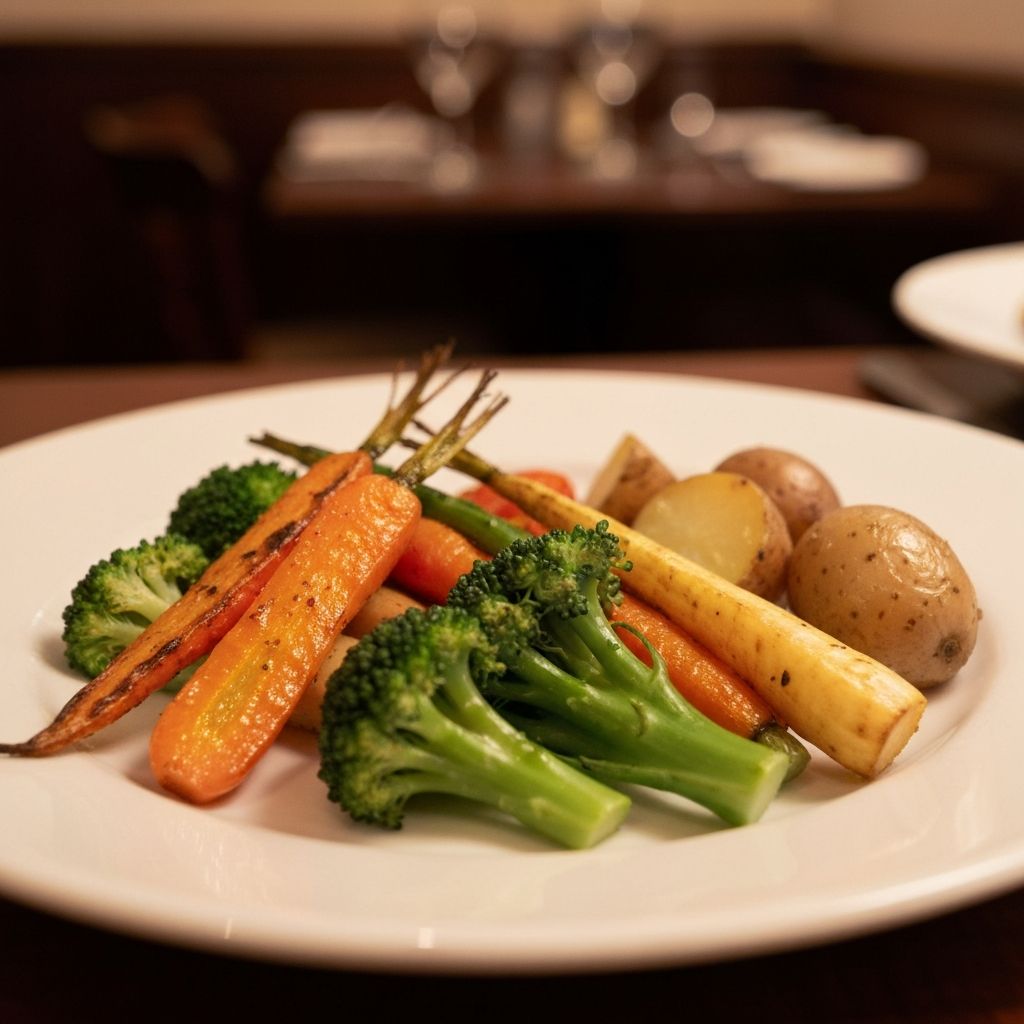
- Roasted vegetables: Cut vegetables (carrots, parsnips, beetroot, courgettes) tossed with oil and herbs, then roasted in an oven. Energy density is moderate to higher depending on oil quantity.
- Steamed or boiled vegetables: Vegetables cooked in water with minimal or no added fat. Energy density is lower than roasted or fried preparations.
- Sautéed greens: Leafy vegetables (spinach, kale) cooked in a pan with butter or oil. Energy contribution depends on fat quantity.
- Grilled vegetables: Vegetables such as courgettes or peppers cooked on a grill with minimal oil. Energy density depends on oil application.
- Raw or lightly dressed salads: Mixed greens with minimal or substantial dressing depending on preparation.
Energy Density Variations in Vegetable Preparation
The fundamental energy density of vegetables is relatively low—most vegetables are composed primarily of water and fiber with moderate carbohydrate and protein content. However, the cooking method and added fats significantly influence the final energy content:
Example: Carrots
- Raw carrot (100g): Approximately 40 calories
- Boiled carrot (100g): Approximately 35 calories
- Roasted carrot with oil (100g): Approximately 100-120 calories
- Carrots sautéed in butter: Approximately 120-150 calories
The addition of oil or butter during cooking can nearly triple the energy content of vegetables, demonstrating the significant impact of preparation method.
Vegetables as Main Courses
Increasingly, British restaurants and pubs offer vegetable-based main courses, reflecting both greater attention to vegetarian diets and recognition that vegetables can form the foundation of complete meals.
Vegetable-based main presentations include:
- Vegetable stir-fries: Mixed vegetables cooked quickly in a wok or pan with oil and sauce. Energy content depends on oil and sauce components.
- Vegetable curries: Vegetables in a sauce base (often cream or coconut milk). Energy density varies significantly depending on sauce composition.
- Roasted vegetable platters: Multiple roasted vegetables served together as a standalone course. Energy depends on oil use in roasting.
- Vegetable pies and tarts: Vegetables baked within a pastry crust with binding sauces. Energy density is higher due to pastry fat content.
- Stuffed vegetables: Large vegetables (peppers, tomatoes, aubergines) filled with rice, grains, or other ingredients and baked.
- Vegetable-based salads: Substantial salads with multiple vegetable components, grains, proteins, and dressings.
Salads in British Restaurants
Salads have become increasingly popular as main course options in contemporary British restaurants and pubs. A salad composition can vary dramatically in terms of overall energy density and nutritional profile:
Salad component variations:
- Greens base: Lettuce, spinach, arugula, mixed greens. Very low energy density unless dressed.
- Proteins: Grilled chicken, fish, legumes, cheese. Moderate to higher energy depending on type and preparation.
- Grains: Quinoa, farro, rice. Moderate energy density, contributing carbohydrates.
- Other vegetables: Tomatoes, cucumbers, peppers, radishes. Low energy density.
- Dressing: Oil-based, cream-based, or vinegar-based. Dressing significantly influences total energy, with oil-based versions contributing substantial calories.
- Additions: Nuts, seeds, croutons, cheese. These can add significant energy despite small quantities.
A green salad with vinaigrette and minimal additions may contain 150-250 calories, while a substantial salad with proteins, grains, nuts, and cream-based dressing may contain 500-800 calories or more. The dressing choice is particularly influential in determining total energy content.
Vegetables in Mixed Dishes
Many British pub dishes incorporate vegetables as components of more complex preparations rather than as standalone sides. Examples include:
- Pies and casseroles: Beef and vegetable pies, chicken and vegetable casseroles. Vegetables contribute to the overall composition alongside proteins and sauces.
- Soups: Vegetable-based or vegetable-containing soups. Energy varies depending on broth type and cream content.
- Stews: Meat and vegetable stews. Vegetables soften during long cooking and absorb braising liquids.
- Roast dinners: Roasted meats served with vegetables as traditional accompaniments.
Nutritional Considerations of Vegetables
Beyond energy density, vegetables contribute important nutrients to meals:
- Fiber: Present in most vegetables, particularly beneficial for digestive health.
- Micronutrients: Vitamins and minerals such as vitamin C, potassium, folate vary by vegetable type.
- Phytochemicals: Various beneficial compounds found in plant foods.
- Water content: High in most vegetables, providing volume with low energy density.
These nutritional contributions are independent of cooking method and represent characteristics inherent to vegetables themselves, though some nutrients may be lost or altered during cooking.
Vegetables and Portion Balance
In traditional British pub dining, vegetables typically serve as accompaniments rather than dominating plate space. A typical plate composition might feature a protein (steak, fish) as the primary component, with vegetables and starchy sides (chips, mash) occupying supporting roles.
Contemporary trends sometimes reverse this proportion, with vegetables forming the largest component of the plate, particularly in vegetarian-focused establishments or newer gastropubs incorporating modern dietary awareness.
The proportion of vegetables on a plate influences the overall nutritional composition of the meal, affecting fiber content, micronutrient contribution, and overall energy density.
Conclusion
Vegetables appear throughout British pub and restaurant menus in diverse roles—from traditional side accompaniments to proteins, to increasingly prominent positions as main course components and substantial salad-based meals. The preparation method significantly influences energy density, with roasted, sautéed, and fried vegetables containing more energy than boiled or steamed preparations. Understanding these variations provides context for how vegetables fit into the broader landscape of restaurant meal compositions.
This information is presented for educational understanding of food preparation and menu composition, not as guidance for individual meal choices or dietary decisions.