Grilled vs Battered Fish in Pub Menus
Published February 2026
Introduction
Fish is a traditional and widely available protein option in British pubs and restaurants. However, the method by which fish is prepared dramatically influences its final nutritional composition, particularly in terms of energy density. Two of the most common preparations—grilled and battered—represent distinctly different approaches to cooking fish, with substantial implications for the energy content and macronutrient profile of the finished dish.
Fish as a Menu Staple
Fish has been a cornerstone of British cuisine for centuries, reflecting both geographical proximity to fishing grounds and cultural tradition. Modern pub and restaurant menus continue to feature fish prominently, typically prepared in ways that reflect this culinary heritage. Common species include cod, haddock, salmon, sea bass, and various other white and oily fish.
The two primary preparation methods in pub and restaurant settings are grilled and battered. Each approach offers different advantages in terms of flavor profile, texture, and, importantly, nutritional composition.
Grilled Fish Preparation
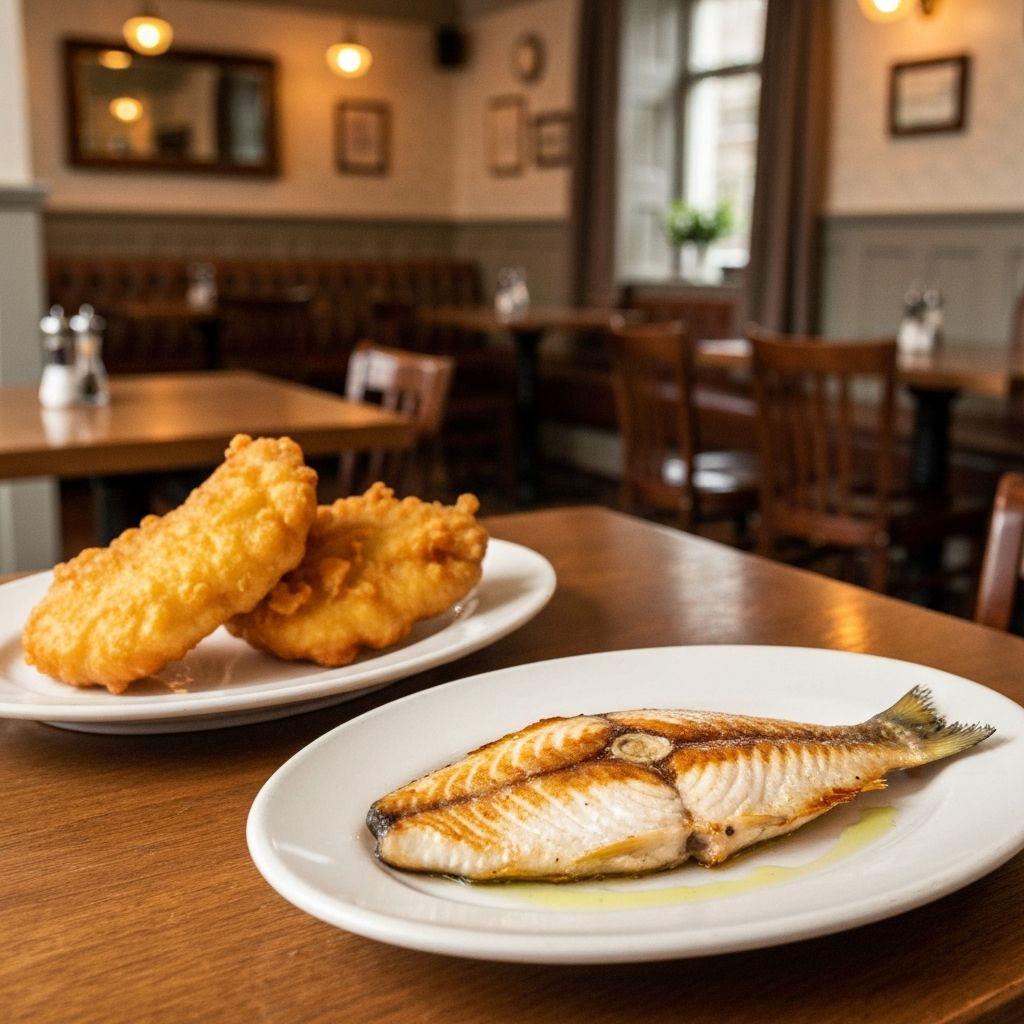
Grilled fish fillets are cooked directly over or under heat, either on a grill plate, under a salamander (broiler), or over an open flame. This cooking method uses minimal added fat beyond what may be lightly brushed or sprayed on the fish before cooking.
Key characteristics of grilled fish:
- Direct heat application with minimal added fat
- Fish skin or surface develops a slight crust or char
- Interior remains moist without absorption of cooking oils
- Cooking time is brief, typically 8-12 minutes depending on fillet thickness
- Natural juices are retained within the fish
The energy content of grilled fish is primarily derived from the fish flesh itself, which contains protein and varying amounts of fat depending on the species. Oily fish (such as salmon) naturally contain more fat and thus higher energy density than white fish (such as cod), but in both cases the energy comes from the fish protein and natural oil content, not from added cooking fats.
Battered Fish Preparation
Battered fish is made by coating fish fillets in a mixture of flour, water, and sometimes egg or beer, then immersing the coated fish in hot oil for deep frying. This process is central to the British tradition of fish and chips, and it produces fish with a crispy exterior and moist interior.
Key characteristics of battered fish:
- Fish is coated in a flour-based batter
- Coated fish is submerged in hot oil (typically 170-190°C)
- Batter absorbs significant amounts of cooking oil during frying
- A crispy, golden exterior is created while the interior remains soft
- Cooking time is brief, typically 5-8 minutes
- The batter acts as a barrier, trapping moisture within the fish
The crucial difference in battered fish is that the batter absorbs substantial amounts of the cooking oil. This oil is now part of the finished dish, significantly increasing the total energy content compared to the fish alone or compared to grilled preparations.
Energy Density Comparison
The difference in energy density between grilled and battered fish is substantial. While exact values vary depending on the type of fish, fillet size, and specific cooking practices, general patterns are clear:
Grilled fish fillet (approximately 150g): Energy content is determined primarily by the fish's natural protein and fat. A white fish fillet provides approximately 150-200 calories, while an oily fish fillet provides approximately 250-350 calories, depending on species.
Battered fish fillet (approximately 150g raw fish, with batter): The addition of batter and oil absorption significantly increases energy content. A battered white fish fillet provides approximately 350-450 calories, while a battered oily fish fillet provides approximately 450-600 calories or more. The batter and absorbed oil account for the majority of this increase.
This difference demonstrates that the cooking method—specifically, whether or not the food is deep-fried and absorbs oil—is one of the most significant factors affecting energy density in similar food items.
Macronutrient Profile Differences
Beyond total energy, the macronutrient composition differs between these preparations:
| Nutrient | Grilled Fish (white fish) | Battered Fish (white fish) |
|---|---|---|
| Energy (kcal) | 150-200 | 350-450 |
| Protein (g) | 25-30 | 20-25 |
| Fat (g) | 3-5 | 15-25 |
| Carbohydrates (g) | 0-1 | 15-20 |
The battered version has a higher proportion of its energy coming from fat (due to absorbed oil) and added carbohydrates (from the batter), while also having a proportionally lower protein content relative to total energy. Grilled fish, by contrast, derives most of its energy from protein, making it protein-dense relative to total calories.
Typical Accompaniments
Both grilled and battered fish are typically served with accompanying items that further influence the overall composition of the meal:
Common accompaniments:
- Chips (thick-cut fried potatoes)
- Garden peas
- Mushy peas (processed split peas)
- Salad or coleslaw
- Bread or bread rolls
- Tartare sauce or other condiments
The total energy content and composition of a fish meal includes not only the fish preparation but also these accompaniments. Chips, for example, are deep-fried and contribute significant energy. Sauces can add fat and additional calories. The overall meal composition is therefore determined by multiple components, not just the fish preparation alone.
Preparation Variations
While grilled and battered represent the two primary approaches, variations exist within each category:
Grilled fish variations:
- Pan-fried fish (cooked in a frying pan with minimal oil)
- Poached fish (cooked in broth)
- Steamed fish (cooked with moist heat)
- Oven-baked fish (roasted in an oven)
Battered fish variations:
- Tempura style (lighter batter)
- Heavy batter (thicker, more absorbent coating)
- Breadcrumb crusted (alternative to flour batter)
All non-fried preparations result in lower energy density than deep-frying, though the exact values depend on cooking method and added fats. All deep-fried preparations result in significantly higher energy density due to oil absorption.
Cultural and Practical Context
Both preparations reflect different aspects of British dining culture. Battered fish and chips, often purchased from fish and chip shops (chip shops), represents affordable, accessible street food and casual dining. Grilled fish, more commonly found in sit-down restaurants or higher-end pub establishments, reflects a different dining context and culinary approach.
Both preparations are legitimate menu options in British pubs and restaurants, each with its own culinary tradition and appeal. The descriptive information provided here is intended to explain how these methods differ in terms of composition, not to suggest that one approach is superior or preferable to another.
Conclusion
Grilled and battered fish represent two distinct approaches to preparing this traditional British protein. The key difference lies in the addition of a flour-based coating and deep-frying, which causes the battered version to absorb significant amounts of cooking oil and consequently increases energy density substantially compared to grilled preparations. Understanding this difference provides important context for how cooking methods influence the final composition of food.
This information is presented for educational understanding of food preparation and composition, not as guidance for individual meal choices. Both preparations are common in British pub and restaurant settings, and the choice between them—or related preparations—is influenced by many factors including personal preference, culinary tradition, available facilities, and individual circumstances.